Prescription swimming goggles are more complex than regular goggles — there's more to get wrong, and more that varies between suppliers. Use this checklist before you commit to any purchase.
The Complete 12-Point Checklist {#checklist}
Work through each point before ordering. A supplier who can’t satisfy all twelve isn’t worth your money.
1–3: Power and Prescription Accuracy {#power}
1. Does the supplier offer 0.25 dioptre increments?
The single most important factor. Your prescription is written in 0.25 dioptre steps (e.g., −2.75, −3.25). If a supplier only offers round numbers (−1, −2, −3), they cannot accurately match your prescription.
2. Can they correct astigmatism (cylinder power)?
Many people have astigmatism, shown as a CYL value on their prescription. Without cylinder correction, your vision will still be blurred even if the sphere power is right.
3. Are both eyes corrected independently?
It’s very common to have different prescriptions in each eye. Some cheap goggles only offer the same power for both eyes. You need independent per-eye correction.
4–6: Lens Quality and Coatings {#lens}
4. What is the lens material?
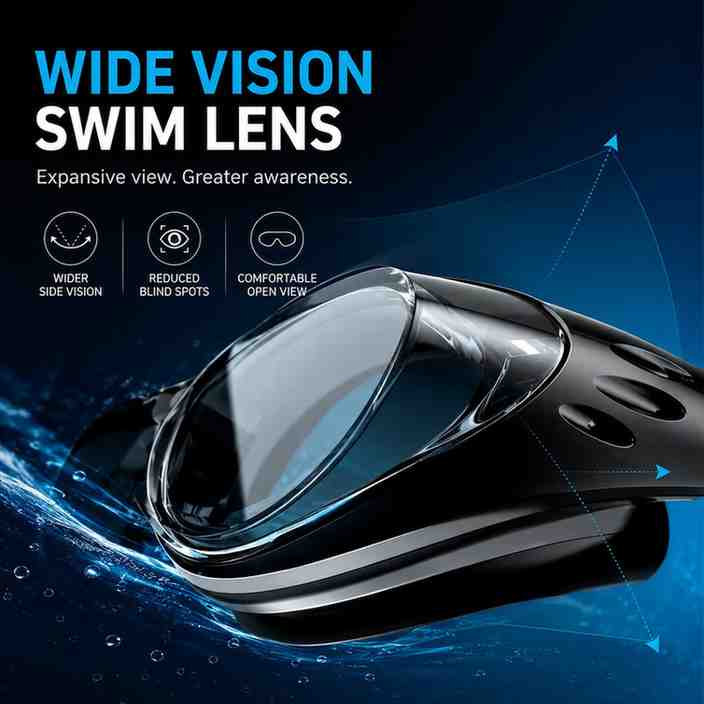
Polycarbonate is the benchmark — impact resistant, optically clear, holds power accurately. Avoid cheap acrylic or plastic lenses that distort at stronger powers.
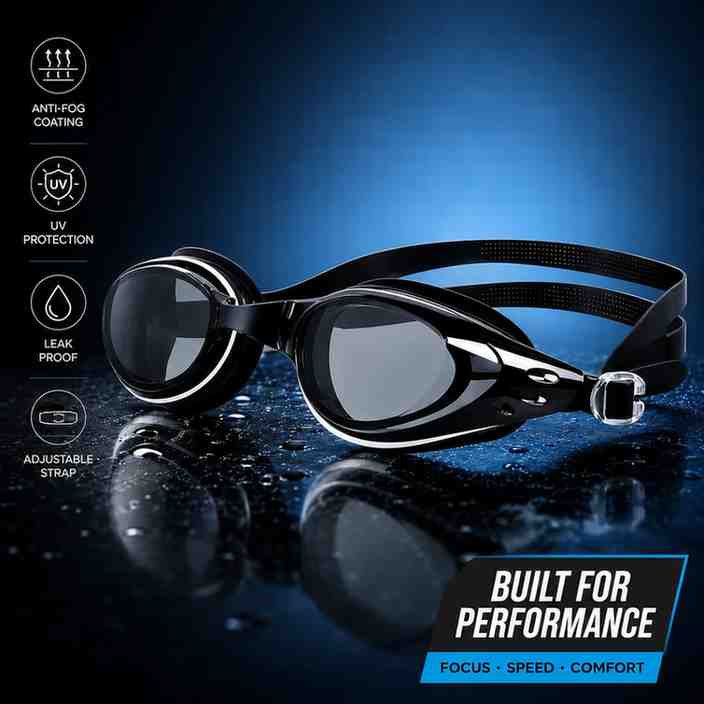
5. Is there a quality anti-fog coating?
Applied to the inside of the lens. Never rub the inside of goggle lenses — you’ll strip the coating.
6. Is UV protection included?
Essential for outdoor swimming. UV400 protection is the standard.
7–9: Fit, Seal, and Comfort {#fit}
7. Is the frame the right size for the wearer?
Adults and children have different face profiles. A kids goggle is not simply a smaller adult goggle.
8. Is the gasket material high quality?
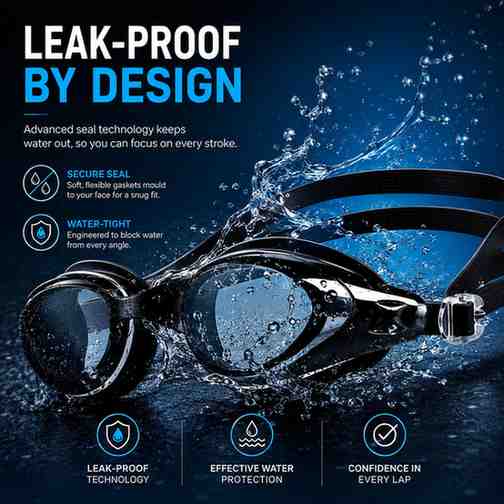
Medical-grade silicone — soft, durable, skin-friendly, seals well across different face shapes.
9. Is the nose bridge adjustable?
An adjustable or interchangeable nose piece lets you customise the fit for a better seal.
10–12: Supplier and Ordering {#supplier}
10. Is there a clear quality guarantee?
A quality supplier should have a clear policy for manufacturing defects or inaccurate prescription matching.
11. Can you actually contact them?
Try contacting them before ordering. The quality of response tells you a lot about after-sales service.
12. Do they understand prescriptions?
A good supplier helps you interpret your prescription values and advises on unusual aspects (high cylinder, large difference between eyes, etc.).
Red Flags to Avoid {#red-flags}
- Round-number-only powers (−1, −2, −3 only)
- No cylinder correction available
- Same power for both eyes
- No contact information
- No lens material information listed
- Unusually low price — quality custom prescription optics cost money to make
- No returns or quality guarantee
Goggles That Pass All 12 Checks
0.25 precision, cylinder correction, per-eye power, polycarbonate lenses, anti-fog, UV400, proper support. Adults and kids.
Adults Goggles Kids Goggles